Highlighted case of the month
Discover our in-depth analysis of a significant true crime case, shedding light on the details and ongoing mysteries. We bring you comprehensive reporting that goes beyond the headlines.
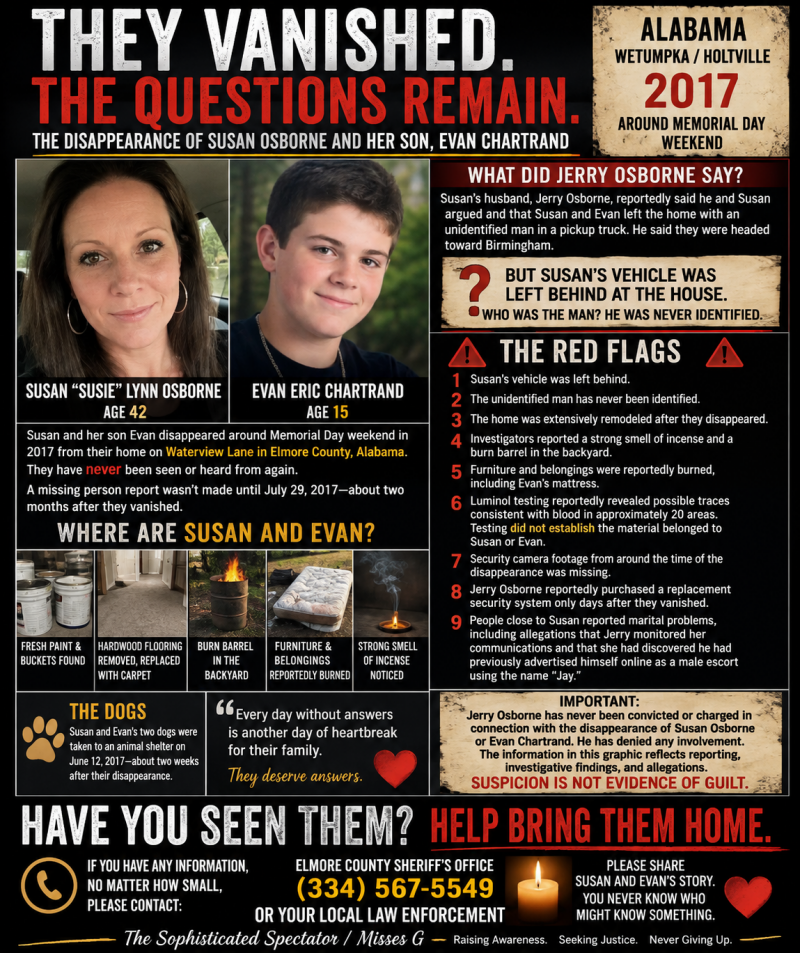
🚨 COLD CASE: WHAT HAPPENED TO SUSAN OSBORNE AND HER SON? 🚨
Written by Shannon Jones
Published August 31, 2026
A MOTHER AND HER 15-YEAR-OLD SON VANISHED — THEN INVESTIGATORS FOUND A HOUSE FULL OF QUESTIONS
Alabama, 2017.
Susan “Susie” Lynn Osborne, 42, and her 15-year-old son, Evan Eric Chartrand, disappeared around Memorial Day weekend.
Nearly a decade later, neither Susan nor Evan has been found.
And the circumstances surrounding their disappearance continue to raise questions.
⚠️ IMPORTANT: Jerry Osborne, Susan's husband, has never been convicted or charged in connection with their disappearance. He has denied involvement and is considered a person of interest in reporting about the case. The circumstances below should not be interpreted as proof of guilt.
🔎 WHAT DID JERRY SAY HAPPENED?
Jerry reportedly told investigators that he and Susan argued and that Susan and Evan eventually left with an unidentified man in a pickup truck.
He reportedly said they were headed toward Birmingham.
But investigators were left with a major question:
Why was Susan's vehicle still at the house?
And who was the mysterious man?
The man was never publicly identified.
🏠 THEN THERE WAS THE HOUSE...
When investigators eventually examined the residence, they reportedly found that significant changes had been made.
• Hardwood flooring had reportedly been removed and replaced with carpet.
• Parts of the house had reportedly been freshly painted.
• A strong smell of incense was reportedly noticed.
• A burn barrel was reportedly being used in the backyard.
• Household belongings were reportedly destroyed, including Evan's mattress.
Why?
That question remains unanswered.
🩸 THE LUMINOL FINDINGS
Investigators reportedly used luminol inside the home and detected possible traces consistent with blood in approximately 20 areas.
But here's where the facts matter:
A luminol reaction does not automatically prove human blood, and it does not establish whose blood was present.
Testing reportedly did not establish that the material belonged to Susan or Evan.
So while the finding is certainly worth noting, it is not proof that a murder occurred inside the home.
📹 THE SECURITY CAMERAS
Another disturbing question involves the home's security system.
The residence reportedly had security cameras, but footage from around the disappearance was missing.
Then, only days after Susan and Evan disappeared, Jerry reportedly purchased a replacement security system.
What happened to the original footage?
Was it erased?
Overwritten?
Was there a technical explanation?
Or could it have contained something investigators needed?
Those answers remain unclear.
💔 WHAT ABOUT SUSAN'S MARRIAGE?
People close to Susan reportedly told investigators that she had discovered Jerry had previously advertised himself online as a male escort using the name “Jay.”
Susan reportedly recognized him from photographs because of his tattoos.
She allegedly told a friend about the discovery and reportedly expressed concerns about Jerry monitoring her communications.
Susan had reportedly discussed leaving the relationship.
Later, she reportedly indicated that the couple had reconciled.
Again, these are reported accounts from people who knew Susan—not findings proven in court.
🐕 AND THEN THERE WERE THE DOGS
Susan and Evan's two dogs were reportedly taken to an animal shelter on June 12, roughly two weeks after their disappearance.
That raises another question:
Who had been caring for the dogs after Susan and Evan vanished?
🚩 THE BIGGEST QUESTIONS
Why did Susan leave without her vehicle?
Who was the unidentified man?
Why was the house extensively remodeled?
Why were belongings reportedly burned?
What happened to the security-camera footage?
Why was a new security system purchased so soon afterward?
And most importantly...
WHERE ARE SUSAN AND EVAN?
Nearly ten years later, their families still don't have the answers they deserve.
This isn't about declaring someone guilty on social media.
It's about remembering two people who disappeared and keeping their names—and their case—in the public eye.
👀 WHAT DO YOU THINK HAPPENED?
If you have legitimate information about Susan Osborne or Evan Chartrand's disappearance, contact law enforcement.
Don't confront or accuse anyone based on speculation.
Sometimes the smallest piece of information can finally crack a cold case.
🕯️ Susan Osborne, 42
🕯️ Evan Chartrand, 15
They deserve to be found.
#SusanOsborne #EvanChartrand #AlabamaColdCase #MissingPersons #ColdCase #TrueCrime #UnsolvedMystery #TheSophisticatedSpectator #MissesG
The Case of Shannon Paulk
Written by Shannon Jones
A case that has long haunted Autauga County is the case of Shannon Paulk. Shannon was only 11 years old when she disappeared from her home community on August 16, 2001. Shannon had been living in the Candlestick Mobile Home Park in Prattville when she went outside to play. By 3 PM her Mother really began to get concerned about Shannon's whereabouts but by 9 PM police were called and a large searched began. Two months later on October 6th Shannon’s remains are found by two rabbit hunters. The shocking discovery occurred in woods just off Autauga County Road 66 in the Autauga County Wildlife Management Area, a public hunting area about 10 miles north of Prattville. Shannon was found in a black plastic trash bag and she was bound with rope. Shannon's death as ruled a homicide.
In 2016 the case was turned over to the Cold Case department and in February 2017 a grand jury convened to go over evidence. At one point a sketch of a possible suspect had been released but in on February 15th, 2017 law enforcement made an announcement that this sketch has been retracted and concluded not valid.
To this date, no arrests have been made in the case.
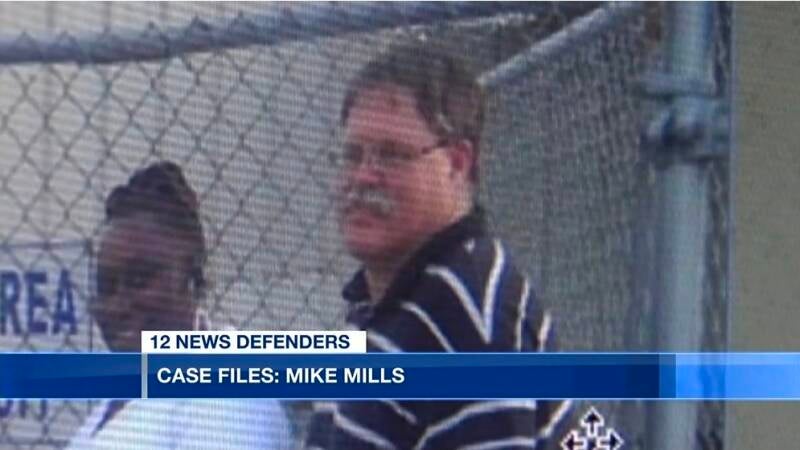
The Murder of Michael “Mike” Mills: 12 Years Without Answers
By The Sophisticated Spectator
A beloved clerk, a rural convenience store and a killer who disappeared into the night
On November 23, 2013, 51-year-old Michael “Mike” Mills went to work his second job at Hillmart Convenience Store in the Spring Hill community of Pike County, Alabama.
He never came home.
More than a decade later, Mills' murder remains unsolved.
The case began as what investigators believed was a robbery, but the shooting transformed a seemingly routine night at a rural convenience store into one of Pike County's most enduring homicide mysteries.
Mills was more than a convenience-store clerk. He was a husband, father and member of the community who also worked for Pike County Transit. His wife, Donna, remembered him as a hardworking and generous man.
According to the Pike County Sheriff's Office, Mills was known to help people who came into the store—even occasionally allowing customers to charge purchases or paying for items himself when they didn't have enough money.
That generosity made his death particularly difficult for the people who knew him.
November 23, 2013 — The night everything changed
Someone entered Hillmart while Mills was working.
According to investigators and Mills' family, the person was attempting to rob the store.
Mills was shot and killed.
When investigators arrived, the scene suggested there had been a struggle.
Kevin Childs, a lieutenant with the Pike County Sheriff's Office who responded to the original investigation, later described the scene as containing items that were in disarray. Investigators also determined that the cash register had been pulled over the counter and taken from the store.
That missing cash register immediately became an important piece of the investigation.
The missing cash register
In the days following the murder, Sheriff Russell Thomas publicly appealed to hunters and property owners in the area to watch for the stolen cash register.
Authorities considered it a vital piece of evidence.
That detail raises an obvious question:
Was the cash register ever recovered?
The publicly available reporting I found does not establish that it was.
If it was never recovered, the register could represent one of the most significant missing pieces of physical evidence in the case.
If it was recovered, the public record does not explain what investigators learned from it.
November 27, 2013 — A $10,000 reward
Four days after the murder, authorities announced a $10,000 reward for information leading to an arrest and conviction.
The reward consisted of:
- $2,500 from the City of Troy
- $2,500 from the Pike County Sheriff's Office
- $5,000 from the governor
Investigators urged anyone with information to come forward and allowed tips to be provided anonymously.
The unusually large reward reflected the seriousness of the case—and the apparent difficulty investigators were having identifying the gunman.
January 2014 — The most intriguing development
Just over two months after Mills' murder, his family spoke publicly about the case.
There had been no arrest.
But Sheriff Russell Thomas made a statement that would become one of the most intriguing pieces of the case.
Thomas said investigators had been working on the case every day and that he was confident about where the investigation had led. He said investigators intended to make an arrest.
But he did not identify the person investigators were focusing on.
And that is where the mystery deepens.
Who had investigators identified?
The public reporting does not answer that question.
There is no reliable source I found that names a person as a suspect based on that January 2014 statement.
That means it would be irresponsible to identify someone today simply because their name appears in unrelated robbery or criminal records.
What we can say is that the Sheriff's Office apparently had a significant investigative lead.
What happened to that lead remains unclear.
The family believed the killer was still nearby
Mills' brother-in-law, Jamie Barron, expressed frustration during the January 2014 interview.
He believed the person responsible was still somewhere in the Pike County community and urged anyone who knew something to stop protecting the killer and tell investigators what they knew.
That statement illustrates one of the most troubling aspects of the case:
Someone may have known something.
But knowing something and being willing to tell investigators are two very different things.
November 2014 — One year later, still no arrest
One year after Mills was killed, his family was still waiting for answers.
There had been no arrests.
Family and friends gathered at Mills' grave and released balloons carrying flyers about the unsolved murder, hoping that someone would see the information and finally provide investigators with the missing piece.
Donna Mills spoke publicly about the emotional toll of knowing that the person responsible could still be living freely.
The $10,000 reward remained available.
Sheriff Thomas again appealed to the public to come forward.
What happened to the investigation?
This is where the public timeline becomes frustratingly quiet.
The January 2014 prediction of an arrest did not result in a publicly documented arrest.
By November 2014, the case remained unsolved.
And there is no reliable public record I found showing that prosecutors ever charged a person with Mills' murder.
That does not necessarily mean investigators abandoned the case.
It means that whatever evidence investigators had was apparently insufficient—or otherwise unavailable—to produce a public prosecution.
2022 — The case comes back into the spotlight
Nearly nine years after the murder, the Pike County Sheriff's Office revisited the case publicly.
In August 2022, WSFA published a feature and podcast titled “Who killed Mike Mills?”
Kevin Childs, now a lieutenant of investigations, discussed the case and his memories of responding to the original crime scene.
The Sheriff's Office described the case as a high priority.
Investigators continued asking anyone who had been in the area or who had seen something suspicious around Hillmart that night to contact them.
The $10,000 reward remained available.
That is significant.
Nearly nine years after the murder, law enforcement was still asking the public for information.
Who killed Michael Mills?
Based on the evidence publicly available, there are several possibilities—but only one broad theory is firmly supported.
The documented theory: a robbery gone wrong
The strongest evidence points toward a robbery.
The cash register was taken.
The store was left in disarray.
Investigators observed what appeared to be a struggle.
And Mills was shot.
The most straightforward theory is therefore that someone entered Hillmart intending to commit a robbery and killed Mills during the confrontation.
Was Mills specifically targeted?
There is no public evidence establishing that.
Nothing in the sources reviewed proves that Mills was targeted because of a personal dispute, relationship or previous conflict.
That possibility should therefore remain separate from the documented robbery theory.
Did the killer know Mills?
Again, there is no public evidence establishing this.
Because Mills was a familiar face in the community, investigators undoubtedly had to consider people who knew the store and its routines.
But familiarity alone is not evidence of guilt.
The names that should NOT be called suspects
During research into the case, other people arrested for robberies in Pike County and surrounding communities can appear superficially interesting.
But an arrest for an unrelated crime is not evidence that someone murdered Michael Mills.
Unless police, prosecutors or court records establish a connection, those individuals should not be identified as Mills' suspects.
That distinction matters—not only legally, but ethically.
A cold-case investigation should follow evidence, not speculation.
The unanswered questions
More than twelve years later, several questions remain:
1. Was the stolen cash register ever recovered?
2. What exactly did investigators learn from the crime scene?
3. Was DNA or other biological evidence recovered?
4. Was the murder weapon ever found?
5. Were surveillance recordings available from Hillmart or neighboring businesses?
6. What did investigators mean in January 2014 when Sheriff Thomas said he was confident about where the investigation had led?
7. Was a specific person interviewed or investigated at that time?
8. Why did the anticipated arrest never occur?
9. Did investigators identify an accomplice?
10. Have the original physical evidence and forensic materials been retested using modern technology?
Those questions are not accusations.
They are the natural questions raised by the documented history of the case.
A case that still needs an answer
Mike Mills' murder is not simply an old newspaper story.
For his wife and family, it remains an unresolved loss.
Donna Mills told WSFA that the people responsible were still out there living their lives while her family continued to live with what happened.
The Sheriff's Office has continued to ask the public for information.
And there is still a $10,000 reward.
The person who knows what happened to Michael Mills may not have been the person who pulled the trigger.
It could be someone who saw a vehicle.
Someone who heard a conversation.
Someone who noticed a cash register discarded somewhere.
Someone who was told a secret.
Or someone who has remained silent for more than a decade.
If you know something
The Pike County Sheriff's Office has publicly asked anyone with information about Mills' murder to come forward.
The Sheriff's Office has listed 334-566-4347 for information about the case.
After more than twelve years, one unanswered question remains:
Who killed Michael “Mike” Mills—and why has no one been held responsible?
The Sophisticated Spectator will distinguish confirmed facts from theories and allegations. No individual should be considered a suspect or accused of Mills' murder unless supported by law-enforcement records, court documents or other reliable evidence.
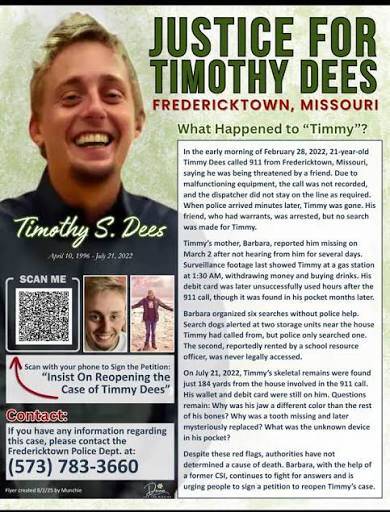
Timothy “Timmy” Dees: Detailed Timeline of His Disappearance and Death
Published August 24, 2026
Written by Shannon Jones
Fredericktown/Madison County, Missouri — February–July 2022
«Important note: This timeline separates established facts from allegations or information reported by family members, media, and later podcast coverage. The circumstances surrounding Timothy Dees' death have not been publicly resolved in the sources reviewed.»
February 27, 2022 — The Last Day His Family Heard From Him
Timothy “Timmy” Dees, 25, was in the Fredericktown/Madison County area of Missouri.
His family later said that Sunday, February 27, was the last time they heard from him. His mother, Barbara Hall, said Timmy normally stayed in contact with his parents, making his sudden silence extremely unusual.
Timmy had traveled to the Fredericktown area with a friend, identified in contemporary reporting as Caleb Nanney. According to his family, there were other people with Timmy during the period leading up to his disappearance. His mother said the family received conflicting accounts about what had happened.
Approximately 1:30 a.m. — February 28
Surveillance video reportedly captured Timmy at a gas station in Fredericktown at approximately 1:30 a.m. on February 28.
This is one of the last independently documented sightings of him.
Investigators subsequently focused on Village Creek Road/County Road 277 in Madison County as an area connected to his final known movements.
---
Approximately 4:40 a.m. — The 911 Call
One of the most significant pieces of information in the case is a 911 call reportedly made from Timmy's phone.
Contemporary reporting established that a 911 call was made from his phone during the early morning hours of February 28, although the initial news reports stated that it was unclear who actually made the call.
A later 2026 podcast episode about the case reports that the caller was Timmy and that he told the dispatcher that a friend who had driven him to Fredericktown was threatening him.
There is a major evidentiary problem: according to that later account, the call itself was not recorded because Madison County's recording equipment had been out of service. The podcast says the equipment had failed in December 2021 and was not replaced until March 2022.
Because the recording is unavailable, the exact words Timmy used, his emotional state, his precise location, and the identity of the person he allegedly described as threatening him cannot be independently established from the audio.
---
Approximately 4:48 a.m. — Officer Responds
The later account of the incident states that an officer arrived at the residence/location associated with the 911 call approximately eight minutes later.
According to that account, the officer did not find Timmy there and did not conduct a search for him.
This is one of the most important unanswered questions surrounding the case.
It is not clear from the publicly available material reviewed here:
- exactly where Timmy was when the call was made;
- exactly what information the dispatcher gave the responding officer;
- whether Timmy was still on the phone when the officer arrived;
- why Timmy was not located;
- whether officers attempted to locate his cellphone;
- what information was documented in the original incident report; or
- whether additional investigative steps were taken that morning but have not been publicly disclosed.
---
February 28, 2022 — Timmy Disappears
After his final known movements during the early morning hours, Timmy disappeared.
Authorities later identified Madison County Road 277/Village Creek Road as being associated with his last known whereabouts.
At this point, however, it is important not to state as fact that Timmy was murdered on February 28. His remains were not discovered until nearly five months later, and the public sources reviewed do not establish the exact date or cause of death.
---
March 2, 2022 — Missing-Person Report
Madison County Commission records later stated that Timmy was reported missing on March 2, 2022.
His mother and father began desperately trying to locate him.
His family repeatedly searched the Fredericktown area and distributed flyers.
Fredericktown Police Chief Eric Hovis later told the city council that he had spent time with Timmy's mother and that the police department had obtained surveillance footage of Timmy at the C-Barn on February 27. He explained that the location where Timmy was believed to have disappeared was outside the city's jurisdiction.
---
March 10, 2022 — Local Authorities Become Involved
According to the March 28 Fredericktown City Council discussion, Jefferson County authorities contacted local authorities on March 10 regarding the search for Timmy.
The Madison County Sheriff's Department reportedly said Timmy had last been seen on February 28 on Village Creek Road and had not been reported missing at that time.
Authorities said local leads had been exhausted at that point.
This period became a major source of frustration for Timmy's family, who believed more should have been done earlier.
---
April 2022 — Public Search Intensifies
By April, Timmy had been missing for approximately six weeks.
His parents were searching the area themselves and distributing flyers. His mother told News 4 that she had repeatedly gone to the Madison County courthouse seeking answers.
The family also hired a private investigator.
Missouri State Highway Patrol, the Madison County Sheriff's Office and Jefferson County Sheriff's Office became involved in the search.
Investigators continued focusing on the area around County Road 277/Village Creek Road.
The family also expressed concerns about people who had been with Timmy before he disappeared. His mother said she had received “10 different stories” from people connected to the events surrounding his disappearance.
Those statements represent the family's account and should not be treated as proof that any particular person was responsible for Timmy's disappearance or death.
---
July 17, 2022 — Community March and Search
Nearly five months after Timmy disappeared, his family and community members organized a march in Fredericktown.
People carried photographs and signs bearing Timmy's name and searched surrounding areas afterward.
His mother publicly pleaded for answers.
His father said the family wanted to bring Timmy home and bury him beside his brother, who had died the previous year.
The family had also offered a $25,000 reward for information leading to Timmy's whereabouts.
---
July 21, 2022 — Human Remains Discovered
At approximately 8:00 a.m. on Thursday, July 21, criminal investigators with the Missouri State Highway Patrol's Division of Drug and Crime Control discovered human skeletal remains on private property in a rural portion of Madison County.
The location was significant.
Authorities said the area where the remains were discovered had not previously been searched in connection with Timmy's disappearance in late February.
---
July 21–22, 2022 — Remains Identified
The Missouri State Highway Patrol confirmed that the remains belonged to Timothy Dees.
The discovery ended the family's months-long search for Timmy, but it did not answer the central question:
What happened to him?
Authorities stated that the investigation remained active.
---
What We Know About His Death
This is where the case becomes particularly important to document carefully.
The publicly available sources reviewed establish that:
✓ Timmy disappeared in late February 2022.
✓ He was captured on surveillance in Fredericktown around 1:30 a.m. February 28.
✓ A 911 call was made from his phone during the early morning hours.
✓ Later reporting says the caller told dispatchers a friend was threatening him.
✓ A responding officer reportedly arrived at the associated location around 4:48 a.m.
✓ Timmy was not located.
✓ His family reported him missing March 2.
✓ Investigators searched for him for months.
✓ His skeletal remains were discovered on private property July 21.
✓ The Missouri State Highway Patrol confirmed the remains were Timmy's.
What has not been established by the sources reviewed is:
- the exact cause of death;
- the exact manner of death;
- the exact date of death;
- where Timmy died;
- who was responsible, if anyone;
- whether the person allegedly threatening him was ever identified publicly as a suspect;
- what happened between the 911 call and the discovery of his remains; or
- whether anyone has been charged in connection with his death.
The Missouri State Highway Patrol did not publicly release additional information when his remains were identified because the investigation remained active.
---
The Critical 4:40–4:48 a.m. Window
For anyone investigating this case, this may be the most important eight-minute period.
Approximately 4:40 a.m.
911 call reportedly comes from Timmy's phone.
Reported information: Timmy allegedly says a friend who drove him to Fredericktown was threatening him.
Problem: There is no recording of the call available according to the later account.
Approximately 4:48 a.m.
An officer reportedly arrives at the location associated with the call.
Problem: Timmy is not found.
Unanswered question: What happened to Timmy during those eight minutes—and what happened immediately afterward?
That question is particularly important because Timmy apparently knew he was in danger if the later account of the 911 call is accurate.
---
The Three Biggest Unanswered Questions
1. Who was with Timmy?
Contemporary reporting identified Caleb Nanney as the friend who was with Timmy during the period before his disappearance, but the available reporting does not establish that Nanney was responsible for Timmy's death.
News 4 reported that it attempted to contact Nanney for comment but did not receive a response.
2. What exactly happened during the 911 call?
This may be the most frustrating missing piece of evidence.
If the later account is accurate, Timmy was calling for help because someone was threatening him.
But there is no surviving recording to establish exactly what he said.
3. How did Timmy end up on the private property where his remains were found?
Authorities said the area had not previously been searched in connection with his disappearance.
That raises obvious investigative questions about whether Timmy traveled there voluntarily, was taken there, or died somewhere else and was subsequently moved.
There is currently not enough publicly available evidence to answer those questions conclusively.
---
Bottom Line
Timothy “Timmy” Dees disappeared in the early morning hours of February 28, 2022, after being seen in Fredericktown and after a 911 call was reportedly made from his phone.
His family spent nearly five months searching for him.
On July 21, 2022, investigators found skeletal remains on rural private property in Madison County. The remains were subsequently identified as Timmy's.
The public record establishes the disappearance and recovery of his remains, but does not publicly establish exactly how, when, or by whose actions Timmy died.
For that reason, any article about Timmy's case should be especially careful not to turn allegations, theories, or unanswered questions into established facts.
Sources
Contemporary reporting from KFVS, KBSI, First Alert 4, and the Daily Journal provides the strongest publicly available timeline. A 2026 episode of the Survived podcast provides additional claims concerning the 911 call and the responding officer, but those details should be labeled as later-reported information rather than independently established facts.
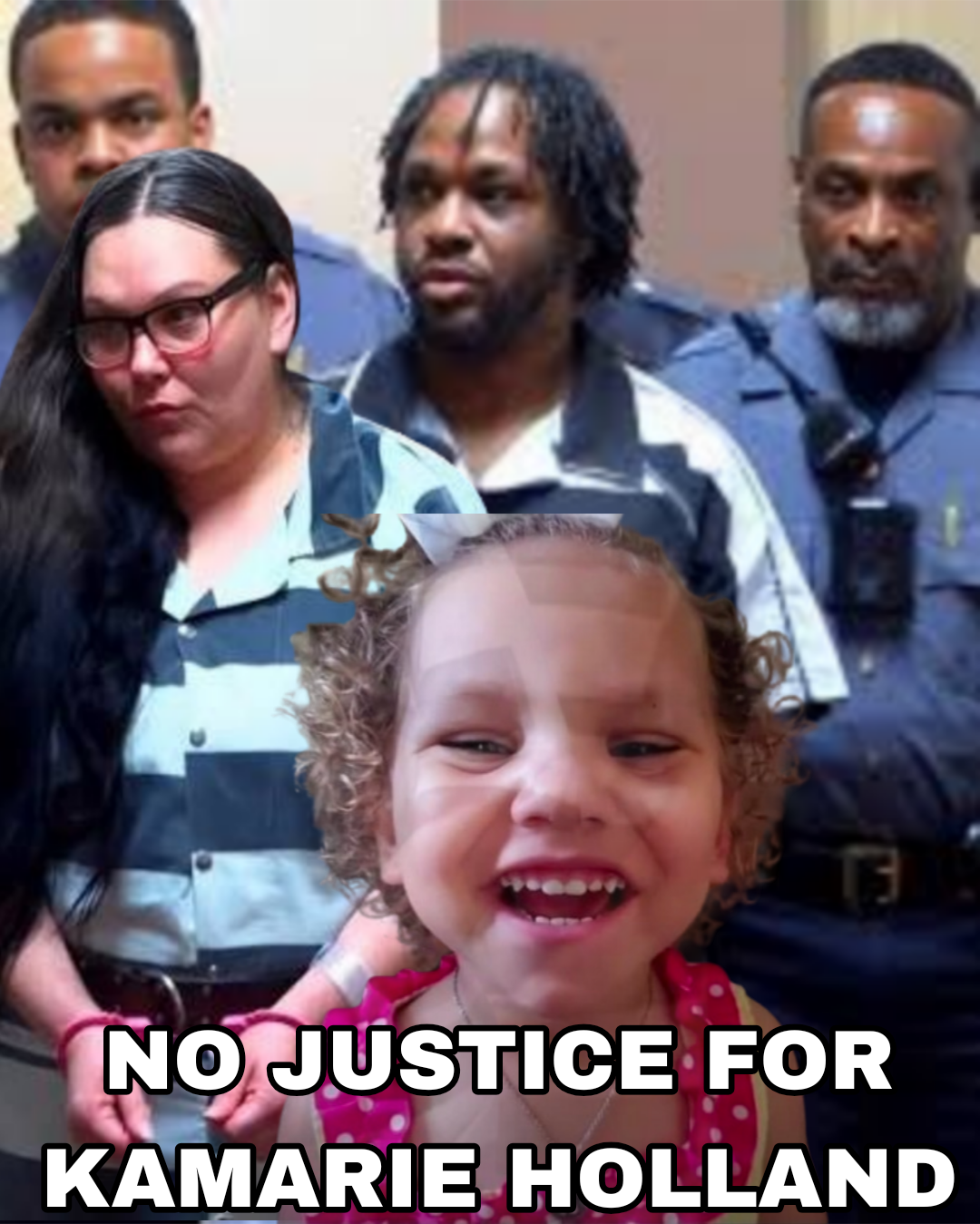
Alabama has FAILED Kamarie Holland! No justice has been served.
Written by Shannon Jones
Kamarie Holland was only 5 years old when her mother, Kristy Siple, made the decision to sell her to Jeremy Williams on December 13, 2021.
Kristy Siple pleaded with Corey Holland for a visit with their daughter, Kamarie. Corey, who had full custody, wanted to foster some form of relationship between Kamarie and her mother. Unbeknownst to him, Kristy was planning to sell their daughter for $2,500 to Jeremy Williams, believing he was acting in Kamarie's best interest.
Kristy struck a horrifying deal with Jeremy Williams, agreeing to sell 5-year-old Kamarie for one hour of oral sex. Williams took Kamarie from her mother’s home in Columbus, Georgia, to an abandoned house he once owned in Phenix City, Alabama. There, he brutally assaulted, raped, sodomized, and strangled the innocent Kamarie.
Afterward, Kristy falsely reported Kamarie missing to the police. Authorities quickly identified Jeremy Williams as a suspect and located him shortly thereafter. Tragically, Kamarie's lifeless body was discovered the following day.
Initially, Kristy Siple faced serious charges, including felony murder by kidnapping, felony murder by sodomy, felony murder by rape, and sex trafficking. However, in a shocking move to cut costs, Alabama removed the murder charges, allowing her to plead guilty only to the sex trafficking charge. There was no justice for Kamarie.
Williams ultimately pled guilty and received the death penalty. He also confessed to a series of violent crimes against children, including the murder of his infant daughter in Alaska and the sexual assault of at least two other young victims. Choosing not to languish on death row for over 20 years, he requested an expedited execution, which Alabama granted to save money. In just five short years, he was executed by lethal injection at the William C. Holman Correctional Facility in Atmore, Alabama. Once again, no justice for Kamarie Holland.
Kamarie's biological father, Corey Holland, a respected citizen and family man, was indicted by a grand jury for allowing Kamarie to visit her mother in violation of a court order, which ultimately led to her tragic death. He was also barred from attending the execution of Williams, the man who brutally took his daughter's life. Once again, no justice.
Kamarie Holland was failed at every turn. The state of Alabama played a role in these injustices.

Written by Shannon Jones
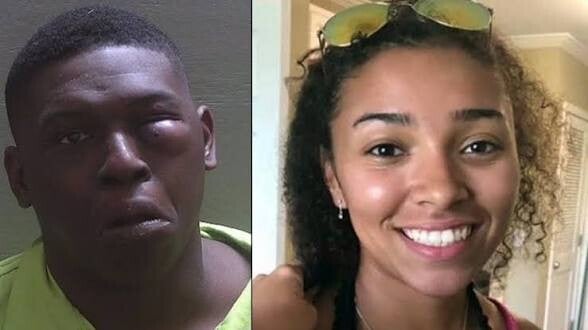
Ibraheem Yazeed, accused of killing Aniah Blanchard is set to go to trial March of 2026.
But what about his other victims? Yazeed took other lives before taking Blanchards and yet there is little to no mention of this in the media. Who decided which victims life mattered and in what order?
Alabama Governor Kay Ivy established "Aniahs Law" and the Governor was seen on news videos many times discussing this new law. Not one time did the Governor mention the other lives Yazeed took away.
Blanchards life is not to be diminished in a way, however, let's look into the lives of the others Yazeed killed.
Yaheeds killing rampage began in 2018 when Montgomery County Prosecutors say he shot Stephen Hamby to death in a wooded area right off of Maxwell Boulevard near the Salvation Army.
District Attorney Daryl Bailey said that on Dec. 1, 2018, Ibraheem Yazeed shot both Stephen Hamby and Geraldine Talley multiple times. Hamby was pronounced dead on the scene. Talley survived the incident.
A quote was obtained by Stephen Hambys mother Angela Weldon upon learning her son's killer had been found. Weldon said “There is a sense of peace that he will not be able to harm anybody else’s child".
At the time Yazeed was charged with the death of Aniah Blanchard, he had been out on bail from a 2019 incident in which he was charged with attempted murder, two counts of first-degree kidnapping and two counts first degree robbery. This also occurred in Montgomery. The victim in this case was nearly beaten to death.
However, Yazeed will face trial in Lee County first for the murder of Aniah Blanchard.
When questioning why Yazeed stands trial for Blanchard first (cherry picking), we were told there is no real or right answer.
Lee County prosecutors are seeking the death penalty.
Attempts to reach Talleys family were unsuccessful. Hambys family told us they are satisfied that he is facing trial for his sole role in Blanchards death. One of Hambys brothers, David Thompson said he would like to (at least) be given the opportunity to give a victim impact statement but is not sure if that day will come.
We will continue to follow Ibraheem Yazeeds cases. Whether he is deemed a serial killer or a mass murderer, ALL of his victims deserve the same equal attention from the State of Alabama.
Forever 16: The Unsolved Murder of Tashynina “Tasha” Reese
Published August 21, 2026
By Shannon Jones
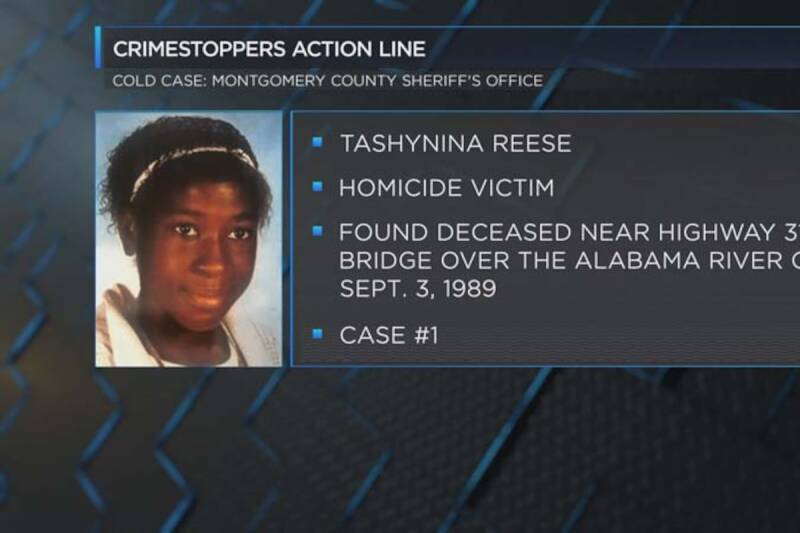
PRATTVILLE, ALABAMA — Thirty-seven years have passed since 16-year-old Tashynina “Tasha” Reese disappeared from Prattville, Alabama. But for the family she left behind, September 1, 1989, remains a date that never truly ended.
Tasha was an 11th-grade student at Prattville High School. According to family members and reporting from local news outlets, she came home that Friday afternoon with plans to attend the Prattville Lions football game that evening. She never returned home.
What initially appeared to be a teenager who had simply failed to come home quickly became a nightmare.
A Friday Night That Changed Everything
Tasha was living with Mary Virginia Harris, who considered her daughter despite not being her biological mother. Harris has described Tasha as a loving, sweet teenager who enjoyed school, church and giving people hugs.
Harris remembers Tasha leaving home that day. It would be the last time she saw her alive.
When Tasha failed to return after the football game, concern grew. By the following morning, Harris contacted the Prattville Police Department to report her missing.
Investigators eventually learned that Tasha apparently never made it to the football game. The question became: Where did she go after leaving home?
Two days after she disappeared, the search ended with a discovery no family should ever have to make.
Tasha's body was found in the Alabama River in Montgomery County. Her death was ruled a homicide.
A Mother Left With Questions
For decades, Harris has lived with questions that have never been answered.
Who took Tasha?
Who killed her?
Why?
And perhaps most hauntingly, what happened during those missing hours between Tasha leaving home and her body being found in the river?
Those questions have remained unanswered for more than three decades.
Tasha's funeral was held September 13, 1989, at Macedonia Baptist Church in Prattville, where she had been an active member.
Instead of watching Tasha grow into adulthood, her family was forced to preserve memories of a teenager who would forever remain 16.
A Case That Refused to Disappear
In the years following the murder, Prattville investigators assisted with the case, which was handled as a Montgomery County Sheriff's Office homicide investigation. Former Prattville police officials, including Alfred Wadsworth, were among those involved in the early investigation.
But no arrest brought the family answers.
No courtroom provided justice.
And Tasha's killer remained unidentified.
In 2024, 35 years after the murder, Tasha's case was once again thrust into the spotlight. A remembrance ceremony was held in Prattville, including a balloon release honoring the teenager.
More significantly, the case was turned over to the Montgomery County District Attorney's cold case unit for another examination. Authorities urged anyone with information—no matter how old or seemingly insignificant—to come forward.
That development gave Tasha's family something they had been waiting decades to hear: the case was still being pursued.
Someone May Still Know What Happened
Cold cases are often solved because someone finally decides to talk.
A person who was afraid in 1989 may no longer have the same reason to remain silent. Someone who was a teenager at the time may now be an elderly adult. A forgotten conversation, an old photograph, a journal, a letter, or a memory that once seemed insignificant could potentially provide investigators with a missing piece.
And investigators have made it clear that information is still wanted.
The Montgomery County Sheriff's Office has asked anyone with information about Tasha's murder to contact its cold case unit.
Remembering Tasha, Not Just the Case
It is easy for an unsolved homicide to become a case number, a newspaper clipping or a name on a list of Alabama's cold cases.
But Tasha was more than a cold case.
She was a daughter.
A student.
A church member.
A teenager who loved hugs.
She had a future that was taken from her before she had the opportunity to discover what that future might hold.
Today, the question surrounding Tashynina “Tasha” Reese remains painfully simple:
Who killed Tasha Reese?
Thirty-seven years later, her family is still waiting for an answer.
And somewhere, there may still be someone who knows.
If you have information about Tasha Reese's murder, contact the Montgomery County Sheriff's Office and ask for the cold case unit. Even information that seems insignificant could be important to investigators.
This article is based on publicly available reporting from WSFA, WAKA Action 8 and Elmore Autauga News. Because the homicide remains unsolved, allegations about unidentified individuals should not be treated as established facts